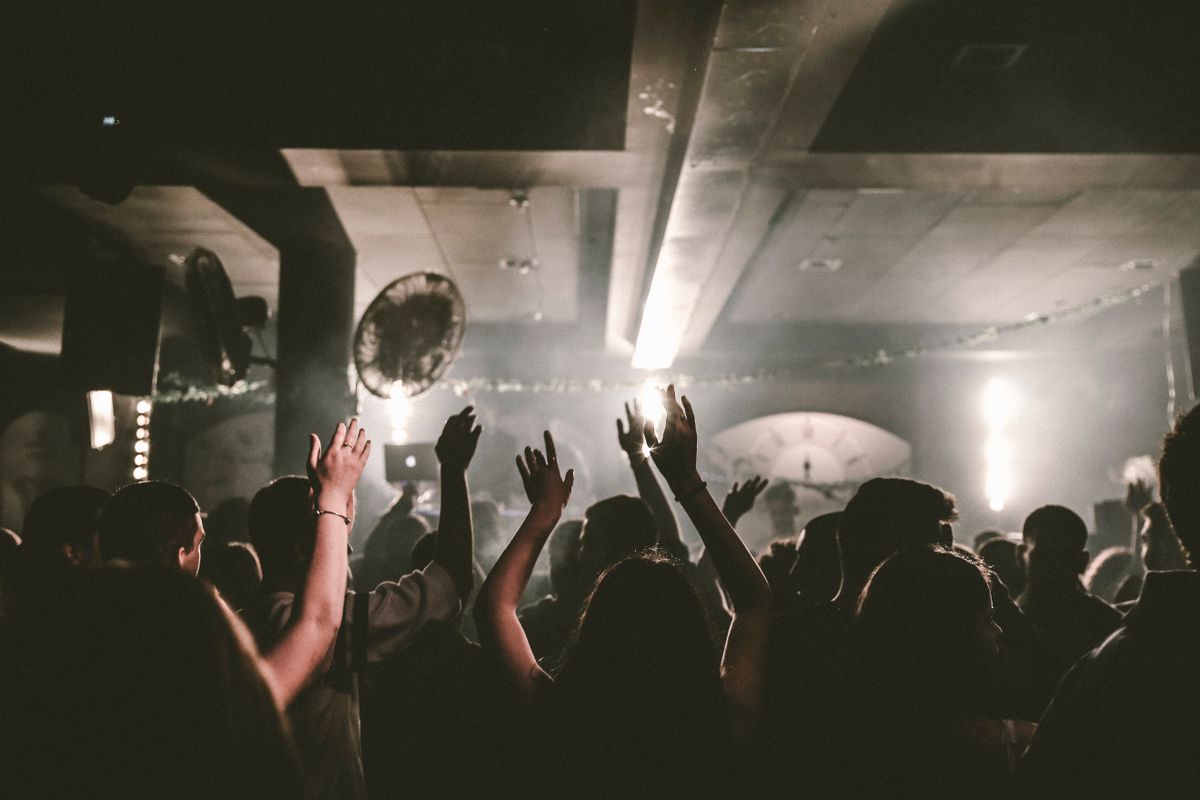
House music was not imported to Chicago. It was born here, in a West Loop warehouse, and the city has been dancing ever since. That inheritance shapes the best Chicago clubs to this day: this is a town where the DJ is the point, not the backdrop. We cover the rooms that matter in 2026, the legends behind them, and the practical stuff nobody tells you, from dress codes to cover charges to getting home safely at 4 a.m.
First, the history lesson you actually need
You cannot understand Chicago nightlife without one name: Frankie Knuckles. In the late 1970s and early 1980s, at a members-style club called The Warehouse on the Near West Side, Knuckles blended disco, gospel-inflected soul, and drum machines into something new. The crowd started asking record stores for the music they heard at The Warehouse. The name got shortened. House music has carried Chicago's fingerprint around the world ever since.
Knuckles was not alone. Ron Hardy, working the decks at the Music Box, pushed the sound harder and stranger, and a generation of South and West Side kids with drum machines turned bedroom experiments into a global genre. The city eventually named a stretch of street after Knuckles, and in 2004 declared an official day in his honor. We mention all this not as trivia but as orientation: when you dance in Chicago, you are dancing in the house that house built. Locals take it seriously, and the best rooms in town still book with that lineage in mind.
One practical consequence of that history: Chicago crowds have standards. A DJ who shows up and plays a festival set on autopilot will feel the room cool in real time, and a selector who digs deep will be rewarded with the kind of sustained, communal dance floor that most cities only see on documentary footage. It also means the scene is unusually intergenerational. On a good night at the right room you will share the floor with twenty-two-year-olds discovering acid house and sixty-year-olds who were there when it was invented, and nobody finds this strange. Plan your night around the lineup, not the room's reputation, and you will be adopting the local method.
Smartbar: the gold standard
If Chicago clubbing has a flagship, it is Smartbar, the basement room beneath the Metro in Wrigleyville, going strong since 1982. This is not a velvet-rope operation. It is a dark, loud, wonderfully unglamorous space with one of the most respected booking policies in American dance music. Frankie Knuckles himself held residencies here. Derrick Carter, one of the city's house titans, has been a fixture for decades. The Sunday night Queen! party is a Chicago institution in its own right, a joyful, inclusive, sweat-soaked celebration that regularly gets cited among the best weekly parties in the country.
What to expect: a crowd that actually dances, minimal phone-waving, serious sound, and DJs treated like visiting dignitaries. What not to expect: bottle service theatrics, a dress code beyond "wear whatever you can dance in," or an early night. Smartbar peaks late. If you only visit one club in Chicago and you care about music, this is the one, and the argument ends there.
River North: the big-room circuit
River North is Chicago's high-gloss nightlife district, where the clubs get bigger, the lines get longer, and the production budgets show. This is the land of LED walls, confetti cannons, and international headliners.
Sound-Bar
A longtime anchor of the neighborhood, Sound-Bar is a multi-room labyrinth where each space runs its own sound and its own mood. It draws big-name EDM and house bookings and a crowd dressed to be seen. The main room hits hard; the side rooms are where you catch your breath.
PRYSM
PRYSM took over a storied club address in the neighborhood and turned it into the city's showcase big room: state-of-the-art lighting rig, festival-caliber DJs, and weekend crowds that treat Saturday like a headline event. If your idea of a great night is a massive drop under a ceiling of moving lights, this is your church.
Spybar
The basement counterweight to all that gloss. Spybar has spent decades booking underground house and techno for people who care about the difference. It is smaller, darker, and more music-first than its neighbors, and it stays open very late. Regulars consider it River North's redemption.
Berlin, and what Lakeview lost
For four decades, a small club on Belmont called Berlin was the beating heart of queer nightlife in Lakeview: chaotic, welcoming, gloriously weird, and open to absolutely everyone who came to dance. It closed in the mid-2020s, and the city is still mourning. We bring it up for two reasons. First, because any honest guide to Chicago clubs owes Berlin a toast. Second, because its spirit did not vanish: the DJs, drag performers, and dance parties it incubated scattered across the city, surfacing at Smartbar, at Northalsted bars, and at roving parties announced mostly on social media. If you see a night billed as carrying that torch, go.
In most cities the club is where you go to be seen. In Chicago, at the good ones, the club is where you go to disappear into the music.
Beyond the obvious: warehouses and wildcards
Chicago's dance floor does not end at the famous rooms. Radius, a cavernous warehouse-style venue on the Near Southwest Side, hosts the biggest touring techno and electronic names in a setting that recalls the genre's industrial roots: huge floor, huge sound, no pretense. On the North Side, Metro upstairs from Smartbar regularly turns into a dance venue when the booking calls for it, and the city's festival culture, anchored by summer events built entirely around house heritage, spills into afterparties all over town during warm months.
Then there is the roving-party layer, the closest thing modern Chicago has to the original warehouse era. Collectives across the city throw one-off nights in lofts, galleries, and borrowed rooms, announced days in advance and sold out by word of mouth. You find them the unglamorous way: follow the DJs you like, follow the local promoters they tag, and say yes when a trustworthy friend says come with me. The production is variable, the sound is usually startlingly good, and the crowds are the most devoted in the city. It is not for every visitor, but it is the deepest end of the pool.
August 2026 is prime time for this. Late summer is when Chicago's dance calendar runs hottest: outdoor day parties along the lakefront, festival afterparties running until dawn, and rooftop sessions that migrate underground when the sun goes down. Follow the venues' announcements the week of your visit rather than planning a month out. The best night of your trip may be announced on a Wednesday.
Cover charges, bottle service, and the money talk
Let us be candid about costs, without quoting numbers that will be wrong by next month.
- Cover: expect one at every serious club on weekends, scaling with the headliner. Music-first rooms charge less than glamour rooms. Buying advance tickets online is almost always cheaper than paying at the door, and for big bookings it is the only way in.
- Bottle service: the River North big rooms run on it. A table gets you guaranteed space, skipped lines, and a startling bill. It makes sense for a group of six splitting the damage on a birthday. It makes no sense for two people who came to dance.
- The underground discount: Smartbar, Spybar, and the warehouse parties charge for the DJ, not the chandelier. Your money goes further where the lighting budget is smaller.
- Tipping: a dollar or two per drink minimum, more if you are ordering rounds. Chicago bartenders remember generous people all night long.
Dress codes and door reality
The rules vary wildly by room, and knowing them saves you a humiliating walk back to the rideshare. The big River North clubs enforce the classic list: no athletic wear, no work boots, no shorts on men most nights, collared-shirt energy encouraged. Enforcement gets stricter as the night gets busier, and the doorman's decision is final, appeal-proof, and not personal.
The music-first rooms flip the logic. At Smartbar or a warehouse party, overdressing marks you as a tourist faster than underdressing. Comfortable shoes are non-negotiable everywhere: Chicago dance floors are for dancing, and you will regret the new leather at hour three. Everywhere, bring a physical ID. Bouncers here scan or scrutinize real cards, and a photo of your passport on your phone will get you exactly nowhere.
Two more door realities worth knowing. Groups of six guys move slower through any line in River North; mixed groups and pairs glide. And guest lists are real but modest in value: signing up on a promoter's list usually means reduced cover before a cutoff hour, not VIP treatment, so read the fine print on the event page before building your night around it.
Timing your night like a local
Chicago runs late, and arriving at 10 p.m. expecting a peak dance floor is a rookie error. Most clubs open around 10, fill after midnight, and peak between 1 and 3 a.m. A meaningful detail: some Chicago venues hold late-hour licenses that keep them pouring until 4 a.m., and 5 a.m. on Saturday nights. Locals structure the whole evening around this, starting with dinner at 9, a bar until midnight, and the club after.
Build your warm-up accordingly. An early show at one of the comedy clubs makes a surprisingly good first act, since the big showcases end just as the dance floors begin to breathe. For a full map of how the pieces fit together, neighborhood by neighborhood and hour by hour, our complete nightlife guide lays out the whole evening's architecture, from first cocktail to last song.
Safety and the ride home
Chicago at 3 a.m. rewards a small amount of planning. The rules we follow ourselves:
- Pre-set your pickup point. Outside big clubs, rideshare pickup zones are often a block away from the entrance. Check the app's map before your phone hits 5 percent battery.
- Wait out the surge. Prices spike at closing time. Twenty minutes and a bottle of water inside, where allowed, often cuts the fare substantially.
- Keep your group whole. Agree on a meeting spot inside the club, because texts do not arrive over a sound system built to rearrange your rib cage.
- Watch your drink, full stop. Standard advice because it is good advice. Bar staff at reputable rooms take reports seriously; use them.
- The CTA runs all night on some lines, but at 4 a.m. we recommend the rideshare. Split it. This is not the moment for frugality heroics.
One more note: if you are under 21, the doors above are closed to you, but the city is not. Our guide to 18+ clubs and all-ages music venues covers what genuinely exists for the not-yet-legal crowd, without the wishful thinking most lists peddle.
FAQ: Chicago clubs
What is the best club in Chicago for house music?
Smartbar, without much debate. It has booked world-class house and techno since 1982, hosted Frankie Knuckles himself, and remains the room where Chicago's dance music lineage lives night to night. Spybar in River North and the big warehouse shows at Radius are the strongest supporting arguments.
How late do clubs in Chicago stay open?
Later than most American cities. Standard bars wind down around 2 a.m., but a number of clubs hold late-hour licenses that extend service to 4 a.m., and to 5 a.m. going into Sunday. Peak dance floor energy typically lands between 1 and 3 a.m., so pace yourself accordingly.
Do Chicago clubs have dress codes?
The upscale River North rooms do: no athletic wear, no shorts, no work boots, with enforcement at the door's discretion. The underground and music-focused venues care far less about labels and far more about whether you came to dance. In every case, bring a physical government ID, because a phone photo will not get you in anywhere.