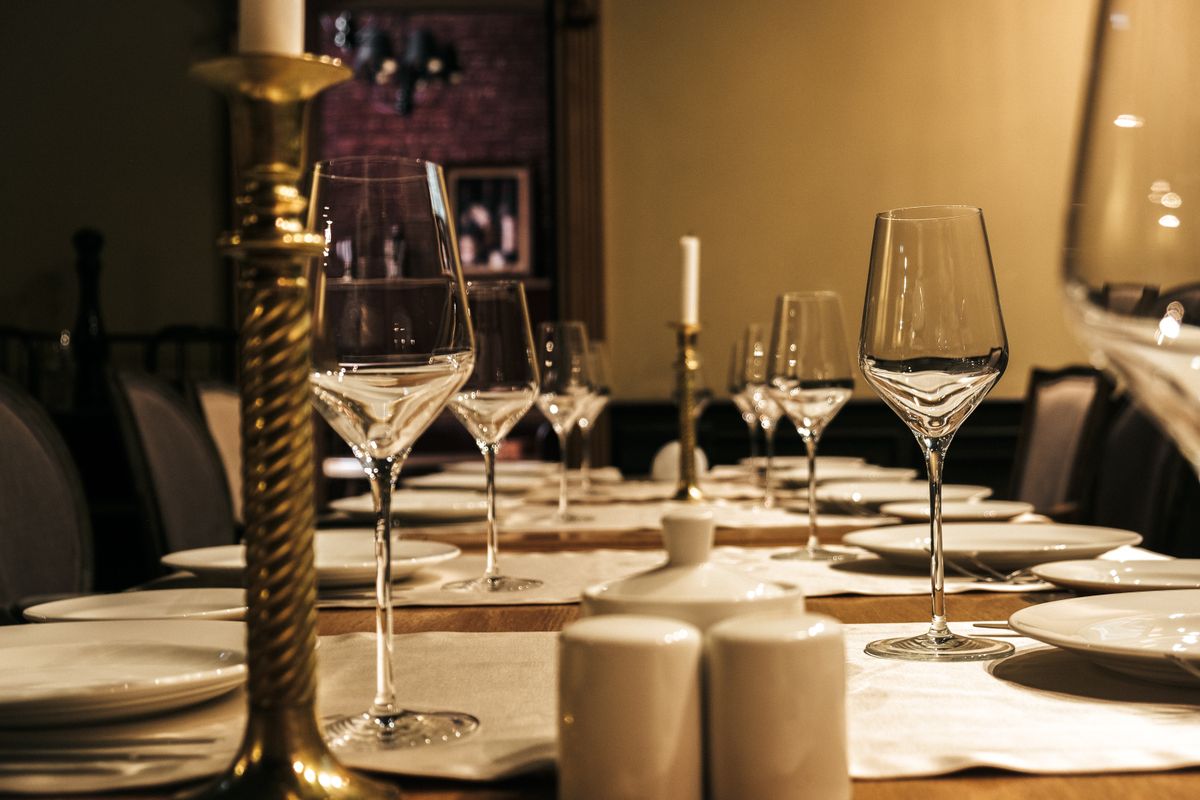
Chicago supper clubs are having a moment again, and we could not be happier about it. The formula is old and it works: a dim room, a cold martini, a cut of prime rib, and somebody on a small stage earning their keep. We spent the fall making the rounds of the rooms that still do dinner and a show properly, from Rogers Park to the lore-heavy banquet palaces of the past, and this is what we found.
What a Supper Club Actually Is
Let us define terms, because the phrase gets thrown around loosely. A supper club is not a restaurant with a speaker in the corner, and it is not a concert venue that sells nachos. It is a room where the meal and the entertainment carry equal billing, where you settle in for the whole evening, and where nobody is trying to turn your table. The classic markers: a brandy old fashioned or a serious martini to start, a relish tray if the kitchen respects tradition, a protein-forward menu built around prime rib or a fish fry, and live music that starts when the plates are cleared, or sometimes before.
The pace is the point. In an era when most dinners out feel like a ninety-minute transaction, the supper club asks you to surrender your evening. You arrive at seven and you leave when the band does. We find this civilized. Your phone stays in your pocket because the room gives you something better to look at.
The Wisconsin Bloodline
Chicago did not invent the supper club, and we should be honest about that. The form was perfected an hour or three north of here, in Wisconsin, where roadside rooms with knotty pine walls and taxidermied deer have been serving relish trays and brandy old fashioneds since the middle of the last century. Generations of Chicagoans absorbed the ritual on trips to the Northwoods: the ice cream drink after dinner, the bartender who remembers your family, the sense that the room itself is the destination.
That tradition has been bleeding south for years. You can taste it in any Chicago room that serves a proper old fashioned muddled with fruit, in every restaurant that has quietly added a Friday fish fry, and in the growing number of local menus that treat prime rib as a Saturday event rather than a relic. When we call a Chicago room a supper club, we are really saying it honors that northern inheritance: unhurried, unironic, and generous with the butter.
The Green Mill: The Room That Never Stopped
Every conversation about dinner-and-a-show culture in this city has to pass through Uptown. The Green Mill has been pouring drinks and presenting jazz since the early twentieth century, and its Capone-era mythology is so well worn we will spare you the retelling. What matters is that the room still functions exactly as intended: low green light, a horseshoe of a bar, and musicians who treat the stage as sacred ground because it is.
The Green Mill is a cocktail room rather than a full dinner house, so we treat it as the second act of a supper club evening built across two addresses: eat somewhere serious in Uptown or Andersonville first, then settle in for the late sets. Respect the room's famous rule about talking during performances. The bartenders enforce it, and so do the regulars, and frankly so do we.
Le Piano: Rogers Park Does It Right
If you want the full package under one roof, Le Piano in Rogers Park is the modern room we send people to first. It is an intimate jazz salon with a French accent, where the grand piano sits close enough that you can watch the pianist's hands while you eat. The programming leans classic: standards, chanson, small combos that understand dynamics. The kitchen sends out French-leaning plates that are better than they need to be, which is the mark of a room that takes the "supper" half seriously.
The test of a real supper club is simple: when the music starts, does the room lean in? At Le Piano, it leans in every single night.
Book ahead, request a table with a sightline to the piano, and do not schedule anything afterward. The evening has its own clock. Check their site for current sets and hours, because the calendar shifts with the seasons.
Andy's Jazz Club: Dinner and a Set Downtown
Downtown, the reliable move is Andy's Jazz Club, a longtime fixture near the river that has been pairing dinner service with nightly jazz for decades. Andy's solves the problem that kills most dinner-and-show attempts: scheduling. Sets run early and late, the kitchen serves through the music, and the ticketing is straightforward. It is the room we recommend to visitors staying in the Loop or River North who want the supper club experience without a long ride north.
The crowd is a genuine Chicago cross-section: conventioneers, anniversary couples, jazz obsessives who came for a specific sideman. Order simply, drink a martini, and let the band do the heavy lifting. If your group would rather grill its own dinner as the evening's entertainment, that is a different kind of show, and our guide to Korean BBQ in Chicago covers the rooms where the tabletop is the stage.
Blues With Your Dinner: The Rosa's Lounge Model
Chicago's blues rooms run adjacent to the supper club tradition, and Rosa's Lounge is the one we point to. Rosa's is a family-run West Side institution, founded by an Italian immigrant who fell in love with Chicago blues and built a room to honor it. It is a music bar first, so we build the supper around it: dinner nearby, then the show, with the club as the evening's main course rather than a garnish.
What Rosa's shares with the great supper clubs is intent. Nobody wanders in by accident. The audience came to listen, the players came to play, and the bar keeps everyone honest. If you want your evening to have a second half you will still be talking about next week, this is the model: eat well, then give the music your full attention.
Club Lucky and the Retro Italian Room
The Italian-American banquet aesthetic is the other pillar of Chicago's supper club memory, and Club Lucky in Bucktown keeps it alive: neon out front, martinis in wide glasses, red sauce served in portions that assume you brought reinforcements. There is no band most nights, but the room itself performs. Vinyl booths, a long bar, waiters who have seen everything. It is dinner as theater even when the stage is empty.
We put rooms like this on the supper club continuum because they preserve the social contract: dress up a little, stay a while, order the second round. A city that keeps rooms like Club Lucky in business is a city that still knows how to have dinner.
Lore Department: The Sabre Room and the Rooms We Lost
No honest piece on this subject skips the ghosts. The Sabre Room, the swords-and-chandeliers banquet palace in the southwest suburbs, hosted everyone from Sinatra-era headliners to several generations of proms before it finally went dark. Older readers will remember the Empire Room at the Palmer House in its cabaret heyday, when the biggest names in American entertainment played dinner shows in the Loop. These rooms are gone as going concerns, but their DNA is everywhere in the current revival.
We mention the lore for a practical reason: it explains the hunger. Chicago did not stop wanting dinner and a show. The format just went dormant for a generation while dining got faster and louder. The rooms above are proof the appetite survived.
How to Book a Good Table (and Behave at It)
Some field-tested guidance, learned the hard way:
- Book the early set for conversation, the late set for atmosphere. The late crowd listens harder.
- Ask for sightlines, not proximity. The best seat is often the banquette at the back with a clear view, not the table touching the stage.
- Confirm whether music carries a cover or a ticket, and whether the kitchen serves through the performance. Policies vary by night, so check their site before you go.
- Tip the band if there is a bucket. This is not optional in our book.
- Silence your phone. Rooms like these run on collective attention, and one glowing screen breaks the spell for a dozen tables.
And pace yourself. A supper club evening is a marathon with cocktails at both ends.
The Group Booking Problem
One more note for anyone organizing six or more people: call the room directly rather than fighting the online widget. Supper clubs are among the last places in the city where a human on the phone can still solve your problem, and the good ones will happily wedge a large party into the right corner if you give them a week's notice. Confirm the day before, arrive together, and designate one payer in advance. Nothing kills a supper club mood faster than eight people doing arithmetic by candlelight while the band waits to start the second set.
The Menu: Martinis, Prime Rib, Relish Trays
Eat like the format intends. Start with a martini or a brandy old fashioned, depending on which side of the Cheddar Curtain your loyalties lie. If a relish tray appears, receive it with gratitude; it is the supper club's handshake. Order the prime rib if the room is known for it, the fish fry if it is a Friday, and something flaming or ice-cream-based for dessert if the menu offers it, because irony has no place here.
Beer drinkers are not excluded from the revival, for the record. The city's taproom culture is its own kind of gathering place, and our rundown of the best breweries in Chicago maps the rooms where the show is the brewhouse itself. And when the weather turns and you want the opposite of a white-tablecloth evening, a counter seat and a hot bowl from our guide to the best ramen in Chicago is the correct palate cleanser between supper club weekends.
Why the Revival Is Real
We are skeptical of trend pieces by profession, but the evidence here is hard to argue with. Reservations at the rooms above are measurably harder to get than they were a few years ago. Younger diners, raised on open kitchens and communal tables, are discovering that a booth, a band, and a three-hour dinner is the most radical format available. The supper club offers what the algorithm cannot: a room full of strangers paying attention to the same thing at the same time.
Our advice is to get in the habit now, before every set sells out. Pick one room from this list per month through the winter. Dress slightly better than necessary. Order the martini. Stay for the last song.
FAQ: Chicago Supper Clubs
What should I wear to a Chicago supper club?
Business casual or better serves you well everywhere on this list. Nobody will turn you away in sneakers at most rooms, but the format rewards a little effort, and you will feel underdressed next to the regulars if you treat it like a sports bar. When in doubt, dress for a nice dinner, because that is what it is.
Do I need reservations, or can I walk in?
Reserve whenever the room takes reservations, especially for weekend sets and any night with a named act. Music rooms like the Green Mill operate first come, first served for much of their calendar, so arrive early for a seat. Policies change seasonally, so check each venue's site before you commit the evening.
Are supper clubs kid-friendly?
Generally no, and we say that with love. Most of these rooms are built around late sets, quiet listening, and cocktails, and several are twenty-one and over after certain hours. Early dinner seatings at the restaurant-first rooms are your best bet if you have younger diners in tow, but confirm age policies directly with the venue.