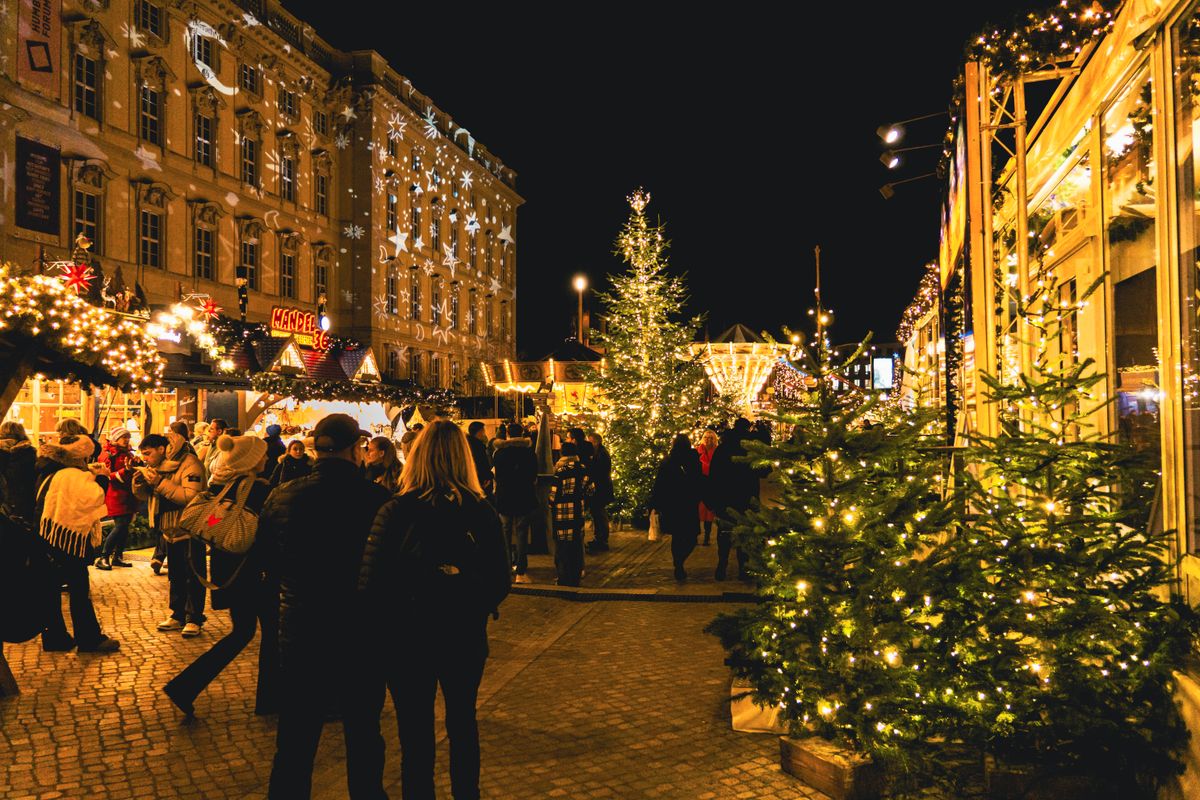
Christkindlmarket Chicago returns to Daley Plaza this month, and with it the annual questions: when to go, what to eat, which mug to hoard, and how to survive the crowds with your good cheer intact. We have been working this market since the aughts, in every weather Chicago can invent, and this guide collects everything we know: the history, the food strategy, the timing tricks, and the warm bars nearby for when your toes give out.
A Short History of a Big Tradition
The market arrived in 1996, imported from the German tradition of the Christkindlesmarkt, the centuries-old Nuremberg original where vendors have sold ornaments and mulled wine since the Renaissance. The German American Events organization brought the concept to the Loop, and Chicago, a city with deep German roots that predate most of its skyline, adopted it instantly. What began as a modest cluster of stalls has grown into one of the largest open-air holiday markets in the country, drawing well over a million visitors in a typical season.
The setting is half the magic. Daley Plaza gives the market a backdrop of civic granite, the famous Picasso sculpture, and the county courthouse looming overhead, which means you can sip gluhwein in the shadow of both modern art and municipal bureaucracy. It is a very Chicago arrangement, and we would not trade it for a Bavarian village square.
The name itself is worth a word. The Christkind, the golden-haired gift-bringer of German tradition, is the market's namesake and mascot, and an actress in the role opens the market each season with a prologue, just as her counterpart does in Nuremberg. It is the kind of detail that separates a real cultural transplant from a pop-up with pretzels, and the market has guarded that authenticity carefully across three decades: German-speaking vendors still make the trip over every year, and the stall designs echo the timbered huts of the originals.
The Mug: Understand the Obsession
Every year the market issues a collectible souvenir mug, usually boot-shaped or otherwise novel, and every year a certain kind of Chicagoan reorganizes a kitchen cabinet to make room. When you order gluhwein or hot cocoa, you pay a small premium for the mug itself, and it is yours to keep. Longtime attendees have shelves of them, a ceramic timeline of holiday seasons past, and comparing vintages is a legitimate local pastime.
Our advice: buy the mug on your first drink, early in the season. Popular designs have been known to run short as the weeks go on, and the market sometimes issues variant colors that vanish quickly. If you are gifting, an extra mug packed carefully makes a better souvenir than anything mass-produced, because it comes with a story attached.
What to Eat: A Working Order of Operations
Come hungry, and eat in this order:
- Bratwurst first. A proper grilled brat in a crusty roll, mustard only, eaten standing up. This is the foundation. Do not skip the foundation.
- Potato pancakes second. Kartoffelpuffer, fried crisp and served with applesauce or sour cream. They travel badly, so eat them the moment they hit your hands.
- Raclette third. Watching the vendor scrape molten alpine cheese over bread and potatoes is dinner and theater in one. The line is long because the line is correct.
- Something sweet to finish. Stollen, strudel, roasted candied nuts, or a fresh waffle. The nuts also make an excellent pocket heater.
Pace yourself across two laps of the stalls. The first lap is reconnaissance. The second lap is commitment. Prices and vendors shift a bit each season, so treat any specific stall memory as a suggestion rather than a promise.
What to Drink: Gluhwein and Its Allies
Gluhwein, the hot spiced mulled wine, is the market's official currency of warmth. It comes in red and often white versions, and there is usually a hot spiked cider or a cocoa option for variety. The alcohol content is gentle, but the cumulative effect of three mugs on a cold afternoon is real, so eat your bratwurst and know your limits. Non-drinkers are well served too: the kinderpunsch, a spiced juice punch, delivers the same steam-in-your-face comfort without the wine.
The first sip of gluhwein on a genuinely cold day, with the Picasso looming overhead and a brass band somewhere behind you, remains one of the cheapest transcendent experiences this city offers.
One warning from experience: the mug is ceramic and the plaza is stone. Mind your grip when your gloves get slick.
When to Go: The Crowd Calendar
The market opens in mid-November and runs through Christmas Eve, and its crowds follow predictable physics. Weekend afternoons in December are the crush: shoulder to shoulder, twenty-minute lines for raclette, strollers gridlocked between stalls. If that is your only window, go with patience and a bag you can wear in front of you.
The connoisseur windows are these. Weekday lunchtimes, when the crowd is mostly Loop office workers moving efficiently. Weekday evenings after the commuter rush thins, when the lights do their best work against the dark. And the opening two weeks before Thanksgiving, when the full menu is running but the tourist wave has not yet crested. Cold snaps are also your friend: the colder the forecast, the shorter the lines, and the better the gluhwein tastes. Dress correctly and the weather becomes a competitive advantage.
Beyond Daley Plaza: The Satellite Markets
The Christkindlmarket brand has expanded beyond the Loop in recent years, with satellite editions in Wrigleyville at Gallagher Way and out in the western suburbs in Aurora. The satellites trade the civic grandeur of Daley Plaza for elbow room: same mugs, similar vendors, far gentler crowds, and easier parking than anything downtown can offer. Families with small children in particular tend to have a calmer time at the satellites.
Our take: the Daley Plaza original is the one to see at least once, because the setting cannot be replicated. But if you are a repeat visitor who mostly wants the food and the mug, the satellites deliver the goods with half the friction. Locations and dates can shift year to year, so check the market's site before you build an itinerary around one.
Warm-Up Bars: The Loop Support System
No one lasts more than a couple of hours out there, and the Loop's old guard is standing by. The Berghoff, the historic German restaurant and bar a short walk south, is the thematically perfect refuge: it has been serving Chicago since the 1890s, it poured the city's first legal drink after Prohibition by local legend, and a stein of its house beer next to a plate of schnitzel is the correct second act to a market afternoon. Miller's Pub, another longtime Loop fixture, does the same job with a more tavern-flavored accent and generous hours.
For something with a view, the rooftop bar at the Chicago Athletic Association hotel across from Millennium Park lets you thaw while looking down at the ice skaters. The Loop in December is genuinely at its best, and the market works beautifully as the anchor of a full evening. If you are planning that evening for two, our roundup of date night ideas in Chicago has several Loop pairings built exactly around this move.
Gift Strategy: Shopping the Stalls Like You Mean It
The market's shopping half rewards a plan. The German and European vendors sell hand-blown glass ornaments, carved wooden figures, nutcrackers, cuckoo clocks, beeswax candles, and wool goods, and quality varies from genuinely heirloom to cheerfully touristy. Our rules: buy ornaments early in the trip and have them wrapped hard, because plaza crowds are unkind to glass. Handle the wooden pieces and buy the ones with weight and detail. And if you see something singular, buy it now; the stall may be picked over or gone on your return lap.
Ornaments are the sweet spot for gifting: small, packable, unmistakably from somewhere. A glass pickle ornament, the German tradition where the hidden pickle earns its finder an extra present, is our default gift for households with kids. Skip anything you could buy at a mall. The whole point of the market is that you cannot.
Market Logistics Without the Headache
Getting there is the easy part: Daley Plaza sits on top of the Loop's transit spine, and nearly every L line stops within a few blocks. Driving downtown in December is an act of self-harm, so take the train. Admission to the market is free; you pay only for what you eat, drink, and carry home. Bathrooms exist but are limited, so plan accordingly, and note that the plaza is exposed to the wind in a way that maps do not communicate. Layers, real boots, and gloves you can eat with are the uniform.
Getting the goods home is its own logistics problem, and we solve it with a rigid tote and a roll of bubble wrap stashed in the bottom, which sounds neurotic right up until the moment a stranger's elbow meets your bag of glass ornaments. If you are flying home, carry the fragile purchases on; checked luggage has ended more ornament collections than gravity has.
Going with Kids
The market is genuinely family-friendly in structure, less so in density. Small children love the lights, the kinderpunsch, and the carved wooden displays, and there is usually a kids' scavenger-style activity or a visit-friendly photo spot depending on the season's programming. The problems are strollers and sightlines: on a packed Saturday, a stroller in the central aisles is a barge in a canal, and a four-year-old sees mostly coats. Go on a weekday morning, use a carrier instead of wheels if your child is small enough, and set a hot-chocolate rendezvous point with any group members old enough to wander. An hour is the realistic limit for young kids in real cold, so build the visit around one loop, one treat, and a warm exit.
The river is a block north if you want to extend the walk, and the bridges dressed in holiday lights are worth the detour. The boats themselves mostly sleep in winter, but touring the skyline from the water is a warm-weather essential we recommend planning ahead for, and our guide to the Chicago architecture boat tour explains how to do it right when the season turns.
The Long Game: Making It an Annual Ritual
The market rewards repetition. Go once and it is a pleasant tourist stop. Go annually and it becomes a calendar anchor: the mug collection grows, you develop stall loyalties, you learn which friend can be trusted to hold four gluhweins through a crowd. Chicago does communal winter traditions unusually well for a city with this much weather, and this is the crown jewel of the genre, the cold-season counterweight to the green river and street party mayhem we cover in our guide to St. Patrick's Day in Chicago. One tradition warms you up, the other one... also warms you up, differently.
Start this year. Buy the mug. See you at the raclette line.
FAQ: Christkindlmarket Chicago
Is Christkindlmarket Chicago free to enter?
Yes, admission is free at Daley Plaza and the satellite locations. You pay only for food, drinks, and merchandise. The souvenir mug carries a small charge on top of your first drink, and it is yours to keep. Bring a card and some cash, since vendor payment setups vary from stall to stall.
How long does the market run each year?
The Daley Plaza market traditionally opens in mid-November and runs through Christmas Eve, with daily hours that extend later on weekends. Exact dates, hours, and satellite schedules shift a little from year to year, so check the official market site before you plan a visit, especially for the opening and closing weeks.
Is the market worth visiting on a very cold day?
Honestly, yes, and sometimes especially then. Cold snaps thin the crowds dramatically, lines shrink, and the hot food and gluhwein do their best work when the air hurts. Dress in serious layers, keep your visit to a focused hour or two, and plan a warm bar or restaurant nearby as your exit strategy.