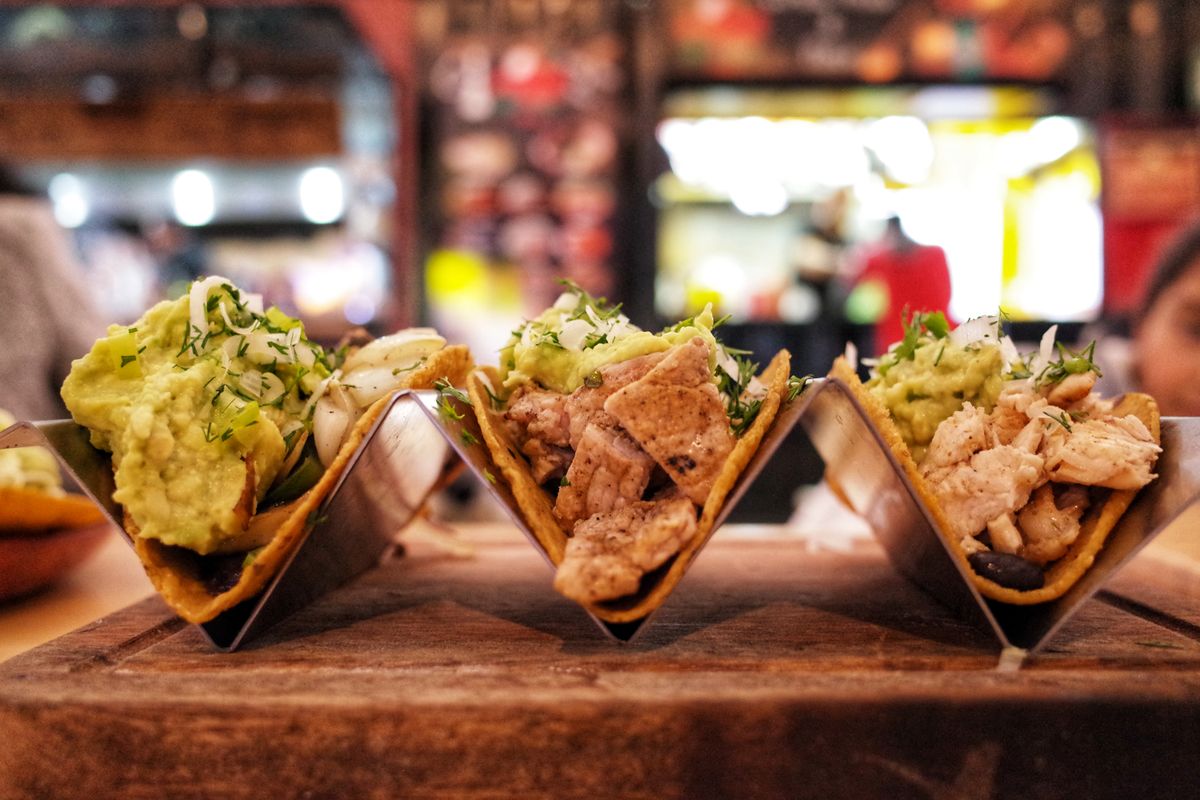
Pilsen is the rare Chicago neighborhood where the food is as loud as the walls. The murals along 18th Street get the postcards, but the real argument for spending a day here is carnitas by the pound, tacos that cost less than your bus fare, and a new generation of kitchens cooking at a level that would embarrass half the West Loop. This guide to Pilsen restaurants covers where we eat, where we drink afterward, and how to get there on the Pink Line.
How to Eat Your Way Down 18th Street
First, a little orientation. Pilsen sits on the Lower West Side, a neighborhood built by Czech immigrants in the nineteenth century (hence the name, borrowed from the Bohemian city of Plzen) and remade by Mexican families from the 1960s onward. The spine is 18th Street, which runs east to west through the heart of it all, and most of what we recommend below sits on or within a couple blocks of it.
Our advice: come hungry, come early on weekends, and pace yourself. Pilsen rewards the grazer. A morning concha here, a half pound of carnitas there, a proper sit-down dinner to finish. Trying to do it all in one meal is a rookie mistake we have made more than once, and we regretted it every time. Also bring cash. Plenty of the old-school counters take cards now, but not all of them, and the ATM fee at the corner store is nobody's friend.
One more thing: Pilsen is a living neighborhood, not a theme park. It has been wrestling with gentrification for two decades, and the businesses below are part of that story. Spend your money at the legacy spots as well as the newcomers. Both matter.
The Carnitas Institutions
Start with the pig. Carnitas Uruapan has been rendering pork in the Michoacan style since 1975, and on weekend mornings the line tells you everything you need to know. You order by the pound at the counter: maciza if you want lean meat, surtido if you trust the house to mix in the rich stuff, cuerito if you understand that crispy-chewy pork skin is one of life's great textures. It comes with tortillas, salsa, and pickled jalapenos, and the correct move is to build your own tacos at a table while the meat is still warm.
Don Pedro Carnitas, further east on 18th, plays the same hymn in a smaller room. It is a no-frills counter operation where the man with the cleaver will assemble your taco in roughly the time it takes you to say thank you. Between the two, we would not dream of picking a favorite in print. Try both. Report back.
A note on timing: carnitas is a morning-and-midday culture. These places sell out and close when the pork is gone, so treat them as breakfast or lunch, not dinner. If you show up at six in the evening expecting a mountain of surtido, you will be eating your feelings instead.
Taquerias Worth the Wait
La Chaparrita is technically a grocery store. It is also, per a long line of chowhounds and more than a few national food writers, home to some of the best tacos in the city, particularly the suadero and the longaniza. You order at the counter in back, you eat standing up or you take it to go, and you leave wondering why anyone pays four times as much for worse tacos in trendier zip codes. It sits a bit south of the main drag in the Little Village direction, and it is worth every step.
Taqueria Los Comales, meanwhile, is the dependable old friend: a local mini-chain born on 18th Street in the 1970s, open long hours, satisfying in the way only a paper tray of al pastor at an odd hour can be. We ranked several Pilsen counters in our guide to the best tacos in Chicago, and the neighborhood holds its own against any part of the city, which is saying something.
And then there is the birria question. The great Birrieria Zaragoza, shrine of Jalisco-style goat, technically sits a couple neighborhoods southwest in Archer Heights, but Pilsen people claim it the way you claim a cousin who made it big. If you have a car or a generous sense of what counts as "nearby," the trip is justified. The consomme alone is justification.
Pilsen does not do subtle. The murals shout, the jukeboxes shout, and the cooking, in its own way, shouts too. You leave full and slightly changed.
The New Wave: HaiSous and the Thalia Hall Orbit
Pilsen's second act as a dining destination started around Thalia Hall, the gorgeous 1892 opera house on 18th Street that reopened as a music venue in the 2010s. For years its anchor restaurant Dusek's held a Michelin Bib Gourmand and taught half the city that beer-focused tasting menus were a thing; that era has since wound down, but the building remains the neighborhood's great gathering place, with bars and events that keep the block humming on show nights.
The standout of the new wave, though, is HaiSous. Chef Thai Dang's Vietnamese kitchen is one of those rare rooms that critics and neighbors agree on: charred lemongrass, whole fish, clay pot cooking, a wine list that takes the food seriously. It is a special-occasion restaurant that never feels stiff, and in August the patio-adjacent energy of 18th Street suits it perfectly. Next door, its daytime sibling Ca Phe Da pours Vietnamese coffee strong enough to reorganize your afternoon.
Elsewhere on the strip, 5 Rabanitos does chef-driven Mexican cooking (the chile relleno has a fan club, and we are in it), and Canton Regio grills northern Mexican steakhouse fare in a room that smells like mesquite and good decisions. The point is that "new wave" in Pilsen does not mean small plates and Edison bulbs. It means ambitious cooking that still feels of the neighborhood.
Panaderias, Cafes and the Sweet Stuff
No Pilsen morning is complete without a panaderia run. Panaderia Nuevo Leon has been pulling conchas, bolillos and cuernos out of the ovens for decades; grab a metal tray and tongs, load up, and try to keep the total under ten dollars. We dare you. The smell alone is worth the trip, a warm cloud of sugar and yeast that hits you half a block away.
For coffee, Cafe Jumping Bean is the neighborhood's longtime living room, an art-filled corner spot on 18th where activists, students and old-timers have been arguing over cortados since the early nineties. It is the kind of cafe every neighborhood thinks it has and almost none actually do.
If you would rather have someone else connect the dots, several outfits run guided eating walks through the neighborhood; we compared the major options in our roundup of Chicago food tours, and Pilsen routes are consistently among the best value in the city because the stops are genuinely great rather than merely convenient. But honestly, this is an easy neighborhood to self-guide. The distances are short and the tortillas are self-explanatory.
Drink: Skylark and the 18th Street Night Shift
When the eating is done, Pilsen drinks well. The Skylark is the standard-bearer: a dim, wood-paneled corner tavern with a photo booth, a legendary tater tot situation, and a crowd that mixes artists, service industry folks and people who have been drinking there since before you were born. It is cash-focused old Chicago in the best way, and on a hot August night the room hums.
Back at Thalia Hall, the building's bar spaces carry the evening: Punch House downstairs deals in exactly what the name promises, communal bowls and all, while the Tack Room's piano-bar corner is one of the more charming small rooms in the city. Time it right and you can catch a show upstairs, punch below, and a nightcap without ever leaving the building.
Beyond those, 18th Street has no shortage of taverns where a bottle of Mexican lager and a shot will set you right. Wander, follow the noise, and trust your instincts.
Do: Murals, the Museum and a Slow Walk
Between meals, Pilsen's galleries-without-walls deserve your time. The murals along the 16th Street rail embankment stretch for blocks, a rotating open-air show that has featured some of the city's best-known street artists. Add the painted facades along 18th and the side streets and you could fill an afternoon just looking up.
The National Museum of Mexican Art in Harrison Park is the anchor institution, one of the country's foremost museums of Mexican and Mexican-American art, and admission is famously free. The permanent collection rewards a slow hour, and if your visit lands anywhere near the fall, the Day of the Dead exhibition is a Chicago tradition in its own right. In late summer, Harrison Park itself is full of league soccer and family cookouts, which is its own kind of exhibit.
If you are building a full day of eating across neighborhoods, note that Pilsen pairs naturally with a second act across the river; the dim sum halls we cover in our guide to Chinatown restaurants are only a short hop away by car or an easy transfer on the L, and the two neighborhoods together make the best one-day eating itinerary in Chicago. Fight us.
Late Summer in Pilsen: Street Food and Festival Season
August is Pilsen's outdoor season, and the street eats keep pace. Elote carts work the parks and busy corners, handing over cups and cobs of corn slicked with crema, cotija and chile powder, and we consider a walking elote the official companion food of mural viewing. The neighborhood's paleterias answer the heat with hand-made ice pops in flavors that run from mango con chile to cucumber-lime, and a paleta on a shaded stoop is a legitimate itinerary item, not a snack break.
The neighborhood's festival calendar is another reason summer visits hit differently. Pilsen throws itself into celebration season with events that take over whole stretches of the neighborhood, from food-focused street fests to one of the city's largest Latino festivals each summer, and if your visit happens to coincide with one, surrender to it. The food vendors alone will rearrange your plans, and the music will rearrange your evening. Check listings close to your date, since schedules shift year to year, and note that festival weekends make the restaurants busier too. Plan your carnitas accordingly, which is to say earlier.
Even on an ordinary weekend, warm evenings bring the neighborhood outside: quinceanera photo shoots outside the murals, league games in Harrison Park, music from open doors along 18th. It is the best backdrop this city offers for the simple act of walking between meals.
Getting There: The Pink Line
The Pink Line's 18th Street station drops you at the western edge of the action, and the station itself is worth a look: the stairwells and platform are covered in murals, a fitting front door for the neighborhood. From the Loop, the ride takes about fifteen minutes. From there, everything in this guide is walkable, with the exception of La Chaparrita and Birrieria Zaragoza, which reward a longer walk or a short rideshare.
The Damen Pink Line stop works for the western end of 18th, and several bus lines run the neighborhood's length if the August heat has sapped your enthusiasm for walking. Driving is doable but street parking near 18th on weekends is a contact sport. Take the train, save the aggravation, and spend the parking money on an extra half pound of cuerito. You will not regret the trade.
FAQ: Eating in Pilsen
What is the best day to visit Pilsen for food?
Weekend mornings are peak Pilsen: the carnitas counters are at full strength, the panaderias are freshly stocked, and the street life is in full swing. Just expect lines at the famous spots. A weekday visit trades some energy for shorter waits, but remember that carnitas specialists sell out early regardless of the day, so plan pork before noon either way.
Is Pilsen good for a dinner date?
Absolutely. HaiSous is one of the better date restaurants in the city, and pairing dinner there with a show at Thalia Hall or a nightcap at the Skylark makes for a complete evening. Book ahead for HaiSous on weekends, since the room is not enormous and its reputation long ago outgrew the neighborhood.
How much time should I budget for the murals and the museum?
Give the National Museum of Mexican Art a solid hour, more if a special exhibition is up, and budget another hour to wander the 16th Street embankment murals and 18th Street facades at a relaxed pace. Combined with a long lunch, that makes Pilsen a comfortable half-day trip, and a full day if you stay for dinner and drinks.