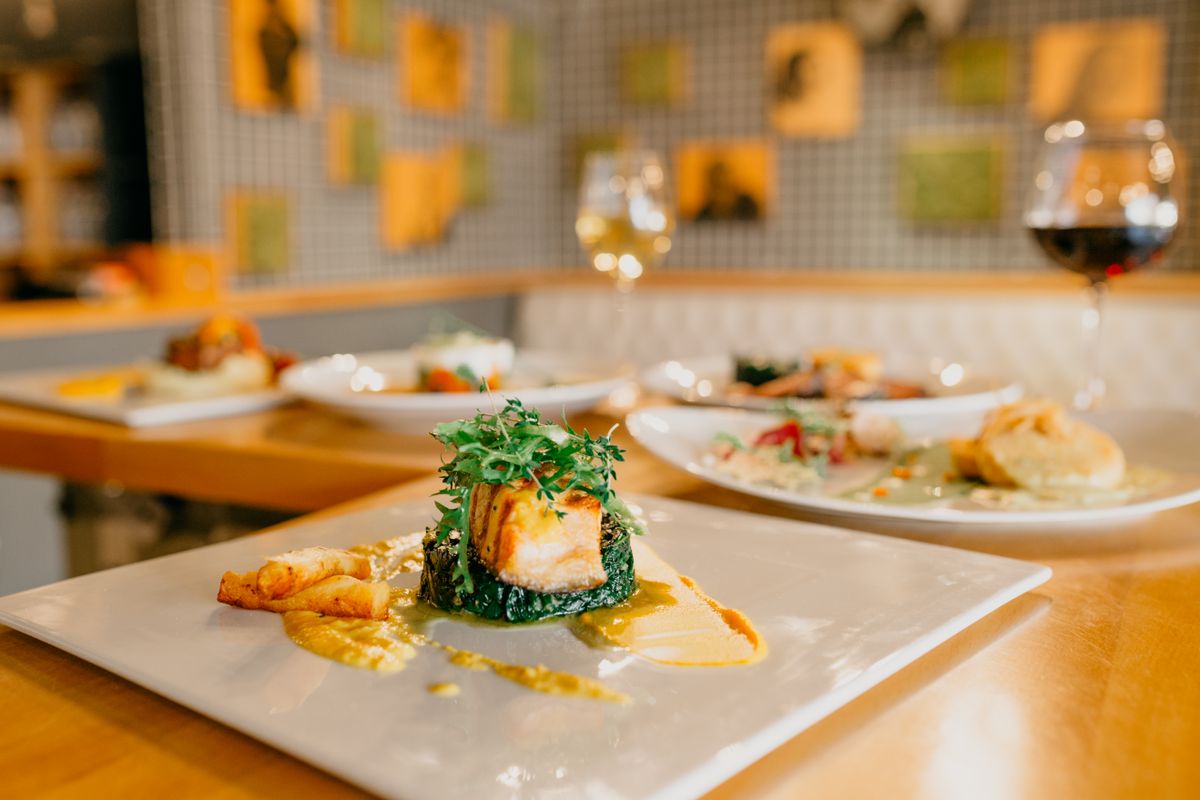
Chicago's fine dining scene has spent fifteen years proving that the coasts do not own ambition. The Michelin star restaurants in Chicago now span three-star temples, tasting counters in former diners, and a Filipino bakery that becomes one of America's most exciting tasting menus after dark. This guide walks the starred landscape as of early 2026: who sits where, what the experiences actually feel like, and how to get a seat without remortgaging anything.
How Michelin Works in Chicago, Briefly
The Michelin Guide arrived in Chicago in 2011, making it one of only a handful of American cities the red book covers. Anonymous inspectors eat, revisit, and rank: one star means a very good restaurant in its category, two stars means worth a detour, three stars means worth a special journey. Below the stars sits the Bib Gourmand, the value designation for excellent cooking at gentler prices, and below that the plain recommended list, which is still a meaningful nod.
Chicago's haul has stayed remarkably stable at roughly two dozen starred rooms in recent years, with the usual churn at the one-star level as restaurants open, close, and evolve. We are deliberately not printing an exact list with counts frozen in time, because the guide updates annually and restaurants change course faster than blog posts get edited. Treat this as a map of the landmarks, then check the current guide before you book anything.
It is worth understanding how stars move, because the churn is the drama. Restaurants gain stars for consistency across multiple anonymous visits, lose them for slipping, and occasionally shed them voluntarily by closing or reinventing themselves. Chicago has watched celebrated rooms give up the chase entirely and watched scrappy storefronts leapfrog established institutions in a single cycle. The annual announcement has become a genuine civic event in the industry here, with kitchens gathering around screens the way other offices watch playoff games. That volatility is a feature: it keeps the city's best kitchens honest, and it means the list you memorize this year will be slightly wrong next year, in interesting ways.
Alinea: The Three-Star Standard
Start at the top. Alinea, Grant Achatz's Lincoln Park flagship, has held three stars since Michelin first came to town, and it remains the single most famous restaurant in Chicago by a comfortable margin. What is dinner actually like? Long, theatrical, and genuinely funny in places. Courses arrive on centerpieces that turn out to be edible, desserts get painted across the table itself, and the famous floating balloon made of green apple still makes grown adults giggle.
Cynics like to ask whether it is all spectacle. It is not. Underneath the stagecraft is some of the most technically precise cooking in the country, and the kitchen has reinvented its menu top to bottom many times over the years. Different rooms within the restaurant offer different tiers of the experience, from the salon to the gallery to a private table overlooking the kitchen. It is a splurge in every direction, and for a once-in-a-decade celebration we have never heard a guest say it was not worth it.
Smyth: The Rise Is Real
The bigger story of the last few years is Smyth. John and Karen Urie Shields opened their West Loop restaurant in 2016 with a quiet farm-driven philosophy, earned one star, then two, and then climbed to three, completing one of the most celebrated ascents in American dining. No gimmicks, no tableside smoke machines: just a tasting menu built on ingredients from a farm partnership downstate, cooked with a kind of calm confidence that sneaks up on you.
Where Alinea is theater, Smyth is chamber music. The dining room feels almost domestic, the service is warm rather than choreographed, and dishes lean on fermentation, aging, and preservation in ways that reward attention. If you can only do one three-star meal in Chicago and you care more about flavor memory than spectacle, this is the reservation to chase. It anchors a neighborhood that has become the city's densest concentration of serious cooking, which we cover street by street in our guide to West Loop restaurants.
The Two-Star Tier
Between the temples and the one-star spread sits a small, ferocious middle tier. Oriole, tucked away on a quiet West Loop block, is the standout: Noah Sandoval's tasting menu is luxurious in the classic sense, heavy on caviar, wagyu, and impeccable seafood, served in a room that feels like a secret. Ever, Curtis Duffy's follow-up to his earlier acclaimed work, brought his signature precision back to the city in a serene space and has held two stars since shortly after opening.
Two-star dinners in Chicago occupy a sweet spot. You get cooking at nearly the three-star level, often with an easier reservation and a slightly shorter evening. For anniversary-grade dinners where Alinea's waitlist has defeated you, this tier is the professional move.
Chicago's fine dining superpower has never been marble and caviar. It is world-class kitchens that still feel like they were built by people you would want to have a beer with.
Kasama: The Phenomenon
No Chicago restaurant story of the decade beats Kasama. By day, Tim Flores and Genie Kwon run a bakery and casual counter in Ukrainian Village where people line up for pastries and Filipino breakfast. By night, a limited number of seats turn over to a tasting menu that made history: the first Filipino restaurant in the world to earn a Michelin star. The double life is the charm. The same room that hands you a longanisa breakfast sandwich in the morning serves a refined multi-course tour of Filipino flavors after dark.
The tasting menu books up fast and far ahead, but the daytime operation requires nothing but patience in line, which makes Kasama the rare starred kitchen you can sample for the price of breakfast. Speaking of which, if a morning of pastry-hunting is more your speed than a tasting menu, our roundup of the best brunch in Chicago puts this whole category in context.
The One-Star Spread
The one-star tier is where Chicago shows its range, and a few names have anchored it for years.
- Boka: the Lincoln Park stalwart from the Boka Restaurant Group, holding a star across multiple chef eras with polished contemporary American cooking. The group's fingerprints are on acclaimed rooms all over the city.
- Elske: a husband-and-wife West Loop spot with Danish sensibilities, a beloved patio, and one of the best-value tasting menus in the starred universe.
- Galit: Middle Eastern cooking in Lincoln Park with hummus and pita that justify the trip on their own.
- Sepia: a longtime West Loop fixture proving that a starred restaurant can also just be a lovely place to eat dinner.
- Mako and the omakase wave: intimate sushi counters have claimed their place in the guide, built around fish flown in daily and a strict, serene pace.
Around these fixtures, newer tasting rooms rotate in and out of the guide each cycle. Chicago's one-star tier historically includes everything from Mexican fine dining to Indian tasting menus to chef's counters with a dozen seats, and part of the fun is that the list refuses to look like any other city's.
Bib Gourmand: The Value Play
Here is the open secret of the guide: the Bib Gourmand list is where locals actually eat. These are restaurants the inspectors rate as excellent cooking at moderate prices, and in Chicago the list has long been a greatest-hits of neighborhood dining: taquerias, Thai kitchens, tavern-style pizza rooms, Southern tables, noodle shops. No tasting menu, no dress code, usually no drama getting a table on a weeknight.
Our advice for visitors on a budget is to build a trip around Bibs and save the stars for one big night. You will eat the city's true character this way. Michelin inspectors are famously good at finding the humble rooms doing serious work, and their Chicago picks over the years have been reliably strong. And some of the city's most iconic eating carries no Michelin designation at all, which bothers exactly no one here; the beef stand counter culture we break down in our love letter to Italian beef in Chicago answers to a higher authority than any French tire company.
Booking: Tock, Timing, and Tactics
Fine dining in Chicago runs disproportionately on Tock, the prepaid ticketing platform that was born here precisely to serve restaurants like these. Instead of a reservation you can ghost, you buy your dinner like a concert ticket, often with prepayment or a deposit. It feels strange the first time and sensible ever after: no-shows nearly vanish, and kitchens can plan.
- Alinea and the three-star tier: plan two to three months out. Seats are typically released in monthly blocks, and the calendar goes fast. Watch for last-minute releases and cancellations, which appear more often than people think.
- Two-star rooms: four to eight weeks ahead for a weekend, much less for a Tuesday.
- One-star and Bib rooms: days to a couple of weeks, with bar seats often available for walk-ins.
- Be flexible on time. The 5 p.m. and 9:30 p.m. slots are the secret doors into fully-booked rooms.
Policies, pricing, and release schedules change constantly, so treat each restaurant's own site as the source of truth and check current details before you commit.
Dress, Pacing, and How Not to Ruin Your Own Night
Dress codes in Chicago fine dining are gentler than the food is serious. Business casual clears the bar almost everywhere; a jacket is never wrong at the three-star tier but rarely required. Nobody will hand you loaner cufflinks or sneer at clean sneakers. This is still the Midwest.
Pacing matters more than wardrobe. A long tasting menu runs two and a half to four hours, so eat a light lunch, skip the pre-dinner cocktail crawl, and do not schedule anything after. Tell the restaurant about allergies and celebrations when you book, not when you arrive. Beverage pairings are wonderful and substantial; sharing one pairing between two people is an accepted move at many rooms and often the wise one. Finally, put the phone down between photos. The kitchens spent fifteen hours on your four hours. Meet them halfway.
Is It Worth It?
The honest answer: yes, once in a while, for the right occasion, at the right tier for you. A three-star dinner is a memory that outlasts most vacations. A one-star dinner is a spectacular night out at roughly the cost of good concert tickets. A Bib Gourmand dinner is simply a great meal. Chicago's particular gift is that all three tiers are executed with a distinct lack of pretension, and the city's starred dining rooms remain friendlier than their equivalents almost anywhere else on earth.
Start with one reservation that scares your credit card slightly. Work outward from there. The guide is a map, not a homework assignment.
And keep some perspective on what the stars measure. Michelin rewards a specific kind of excellence: precision, consistency, ambition on the plate. It does not measure the perfect beef sandwich eaten standing up, the 2 a.m. taqueria, or the corner tavern that has poured the same honest shot-and-beer for fifty years, and Chicago's eating identity lives in those places just as much as in the tasting rooms. The healthiest way to use the guide is as one lens among several. Book the starred dinner, absolutely. Then spend the rest of the trip eating where the line cooks from that same kitchen go on their night off.
FAQ: Michelin Stars in Chicago
How many Michelin star restaurants does Chicago have?
The number shifts a little every year as the guide updates, but Chicago has hovered around two dozen starred restaurants in recent cycles, spanning three-star, two-star, and one-star tiers, plus a long Bib Gourmand list. Check the current Michelin Guide for the exact roster before planning a trip, since openings and closings move names on and off annually.
How far in advance do I need to book Alinea or Smyth?
Plan on two to three months for prime weekend seats at the three-star tier, with reservations typically sold as prepaid tickets through Tock. Weeknights and edge time slots are easier, and cancellations do surface at the last minute for the vigilant. Two-star and one-star rooms generally need only a few weeks of lead time.
Do Chicago Michelin restaurants have dress codes?
Mostly no formal ones. Business casual is safe everywhere, and a jacket is a nice touch rather than a requirement even at the top tier. Chicago fine dining runs notably relaxed compared to other Michelin cities, so focus your planning energy on the booking, the pacing, and your appetite instead of your closet.